 Gas Prices Philippines
How oil refining supplies Philippine fuel
Learn what a refinery does, how it differs from a terminal, and why refinery changes can affect some petroleum fuels more than others.
Published
Independent fan site with no Philippine government affiliation.
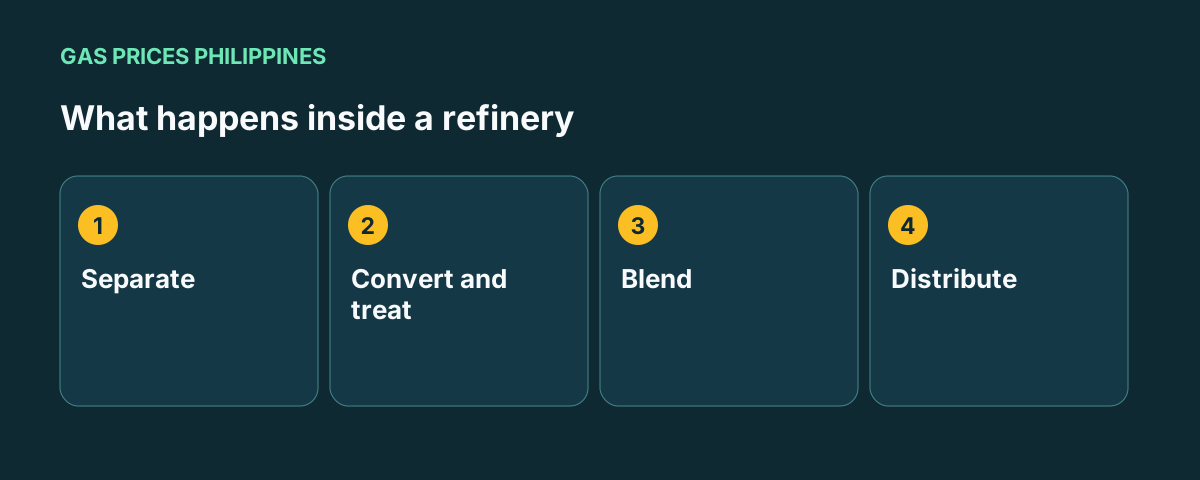
- Separate. Sort crude fractions by boiling range
- Convert and treat. Change or clean selected streams
- Blend. Combine streams to meet a fuel specification
- Distribute. Move finished products to storage and buyers
What to check
- Refineries process crude into fuel components and other products.
- Terminals handle fuel storage and distribution.
- Match facility activity and reporting date before interpreting a supply headline.
What comes out of a barrel of crude
A refinery separates and processes the mixture of hydrocarbons in crude oil. During distillation, different fractions separate by boiling range. Other refinery units can convert heavier fractions into lighter ones, remove unwanted components, or prepare streams for blending into a finished fuel.
Think of a refinery as several linked operations. Distillation creates intermediate streams. Further processing changes or treats those streams. Blending helps the producer meet a product specification. The proportions of gasoline, diesel, kerosene and other products vary with the crude, the equipment, and choices the refinery can make.
How a refinery differs from a fuel terminal
A refinery transforms crude oil. A fuel terminal receives and stores petroleum products for onward distribution. A market can receive locally refined fuel and products made at refineries abroad. When a story describes a facility as an oil terminal, check which activity the source actually reports before interpreting it as a change in refinery capacity.
Capacity usually describes the amount a refinery can process over time. Actual throughput tells you how much it processed during a period. Finished-fuel output asks a separate question about the type and amount of products produced. Use those labels when comparing an announcement with an industry report.
The same distinction helps when a story describes a capacity increase. Ask whether it refers to processing more crude or to a unit adding the ability to make a particular product. A facility can change how much of a fuel it produces even if its crude throughput stays the same.
What a refinery story means at the pump
Imagine a report about maintenance on a refinery unit used to produce a particular blend. A driver might infer that all fuel prices will rise. A more useful question is whether that grade can still be supplied from inventory, another facility, or imported fuel. The affected volume and duration also matter. Without those details the headline supports a supply question, with any pump-price conclusion still uncertain.
For the Philippines, use dated DOE petroleum industry publications when you need an inventory of facilities, their activity, or import figures. Facility status can change between reports. On the ground, use the latest dated notice for the grade and retailer you’re checking, then compare the actual posted price before paying.