 Gas Prices Philippines
Where the Philippines gets its oil
Understand how crude oil and imported fuel reach Philippine motorists and how to check the latest official import data without mixing the two.
Published
Independent fan site with no Philippine government affiliation.
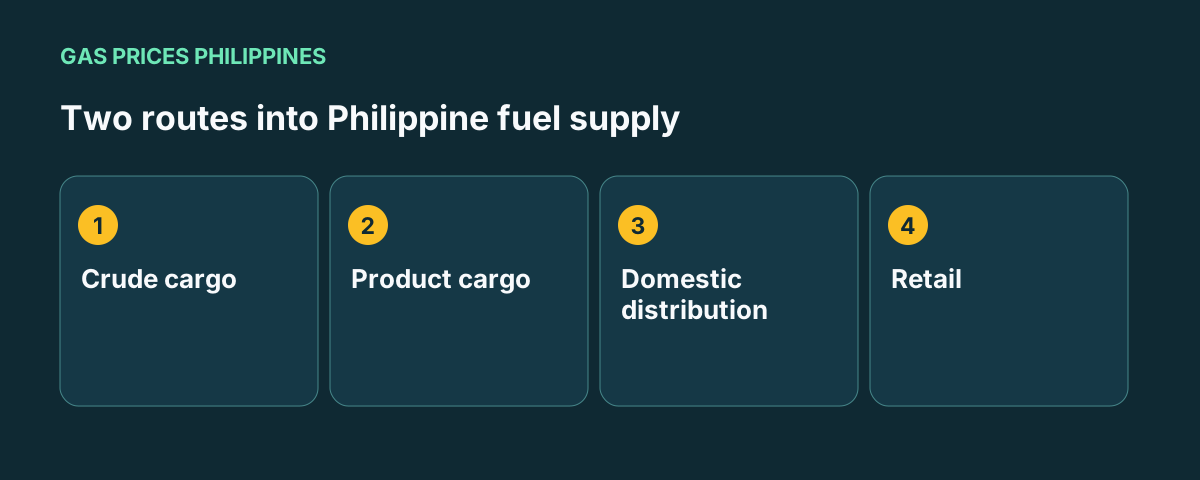
- Crude cargo. Refinery input to be processed
- Product cargo. Finished petroleum fuel for distribution
- Domestic distribution. Storage, transfer, and local delivery
- Retail. Price and grade posted by the station
What to check
- Look up crude and finished fuel in their own categories.
- Compare like units over the same reporting period.
- Check the country definition before naming a leading supplier.
Start with what was imported
Questions about where the Philippines gets oil often refer to two shipments. Crude oil arrives as a refinery input. Finished petroleum products can also arrive ready for further distribution or blending. A country can supply one category without being a major supplier in the other. The period and product together determine what an import ranking tells you.
For a current answer, look for the Philippine Department of Energy’s oil supply and demand publications and the Philippine Statistics Authority’s foreign trade data. A supplier list from an annual report describes the year named in the report. A monthly table can show a different supplier mix, depending on shipments during that month.
Read the table without mixing units
Write down the period, product group, and unit before comparing figures. A table by value can rank suppliers differently from a table by physical quantity, because cargoes can be bought at different prices. If you want to see where the most fuel came from, look for a volume or weight measure appropriate to that product.
Check how the report defines the country column. A shipment can be produced in one country and dispatched from a trading hub in another. Where both concepts matter, keep the labels attached to the figures and use the definitions in the publication. A headline that calls both columns “source country” leaves out that distinction.
When sharing a figure, include the source table and its date range. That lets the reader check whether the ranking includes all petroleum products or applies to a particular product, such as diesel.
What supply data can tell a motorist
A shipment may go to a refinery or to storage before moving through domestic distribution. Delivery includes the costs of getting fuel to the market that needs it. When reading a story about a disrupted route, check whether the reported issue concerns crude supply, finished fuel supply, or the cost of moving cargo. Those details help you work out which fuel could be affected.
Import data describes the supply chain over a defined period. To plan a fill in Cebu, Manila, or another locality, switch to a geographically relevant pump survey or a current station quote. If the data you find is national, keep that label rather than treating it as the price in your area.